
At a glance
- Our kind of strange friend
- Cryptid and regional folklore
- Story connection
- Pacific Northwest, North America
A closer look at the story
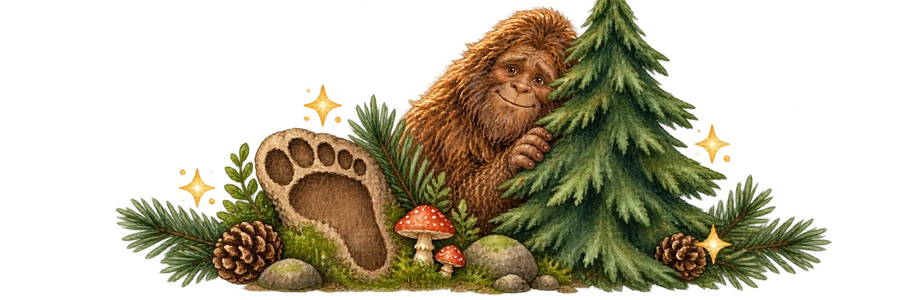
Logging-road reports and large tracks helped spread the Bigfoot name after 1958. The creature became a subject for stories, jokes, and wood carvings in the Pacific Northwest. Indigenous traditions have their own names and meanings; they should not all be folded into one monster story.
What the evidence tells us
People have offered footprints, films, and eyewitness accounts. The Oregon Historical Society notes that most scientists remain skeptical, and that some tracks have been fabricated. A large print needs an explanation, but its size alone cannot identify its maker.
Your turn to investigate
If you found one large footprint, what else would you look for before naming the animal?
Where these notes come from
Grown-ups can view sources in the Parent Area.
- Oregon Historical Society · Bigfoot (Sasquatch) legend
Regional history, reports, cultural traditions, and the scientific debate.
Notes checked September 2026.
Room to be wild
Wildlife needs space. Watch quietly from a distance and follow the place’s wildlife rules. If an animal changes its behavior because of you, give it more room.
Try noticing
Use binoculars with a grown-up. Can you observe without making the animal turn, stop, or move away?
- National Park Service · Watching wildlife
From legend to storybook
Bigfoot Needs Space brings this friend into an imaginative story about personal space and gentle boundaries.
Find the forthcoming story on our shelf →Something to look at closely
Keep a storybook clue, then see how a naturalist might interpret it.
Open this friend’s notebook page →
A little research envelope. What is tucked inside?