


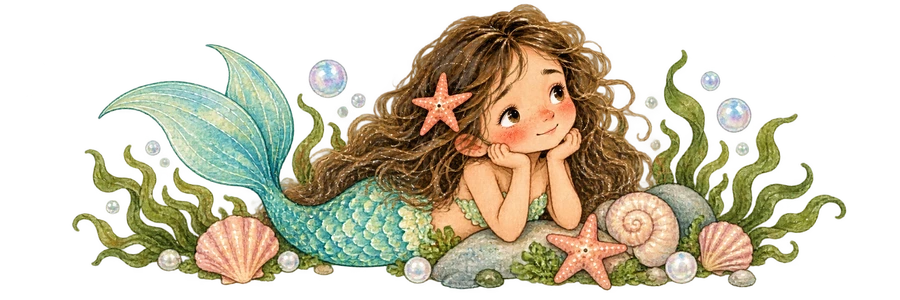
At a glance
- Our kind of strange friend
- Folklore and storybook fantasy
- Story connection
- Sea stories from many places
A closer look at the story
Mermaids appeared as carved figureheads on ships. In Denmark, Hans Christian Andersen published The Little Mermaid in 1837. That written fairy tale is one particular story, not the origin of every mermaid tradition.
Dates to put in your notebook
- 1837Hans Christian Andersen’s The Little Mermaid was published in Copenhagen.
What the evidence tells us
Royal Museums Greenwich shows how mermaids appear in art and sea stories. NOAA reports that no evidence of half-human aquatic beings has been found. Our shy mermaid is a fictional character; real coastal wildlife has its own remarkable lives.
Your turn to investigate
Compare two mermaid illustrations. Which details belong to the artist’s choices, and which would you need to observe in a real animal?
Where these notes come from
Grown-ups can view sources in the Parent Area.
- Royal Museums Greenwich · What is a mermaid?
Ship figureheads, different traditions, and Andersen’s 1837 tale.
- NOAA · Are mermaids real?
The evidence question. Our historical notes use the museum source above.
Notes checked September 2026.
A whole world in a tide pool
A tide pool is part of a living coastal habitat. Leave its animals, shells, seaweed, and stones where they are. A grown-up can help choose a safe place to watch the changing water.
Try noticing
Look from the edge. Which creatures cling to rocks? Which hide in the water? Have a grown-up check tides and local safety advice before you go.
- National Park Service · Rocky intertidal tidepools
From legend to storybook
The Shy Mermaid brings this friend into an imaginative story about shyness, confidence, and belonging.
Find the forthcoming story on our shelf →Something to look at closely
Keep a storybook clue, then see how a naturalist might interpret it.
Open this friend’s notebook page →
A little research envelope. What is tucked inside?